Living Systems
Requirements
Description
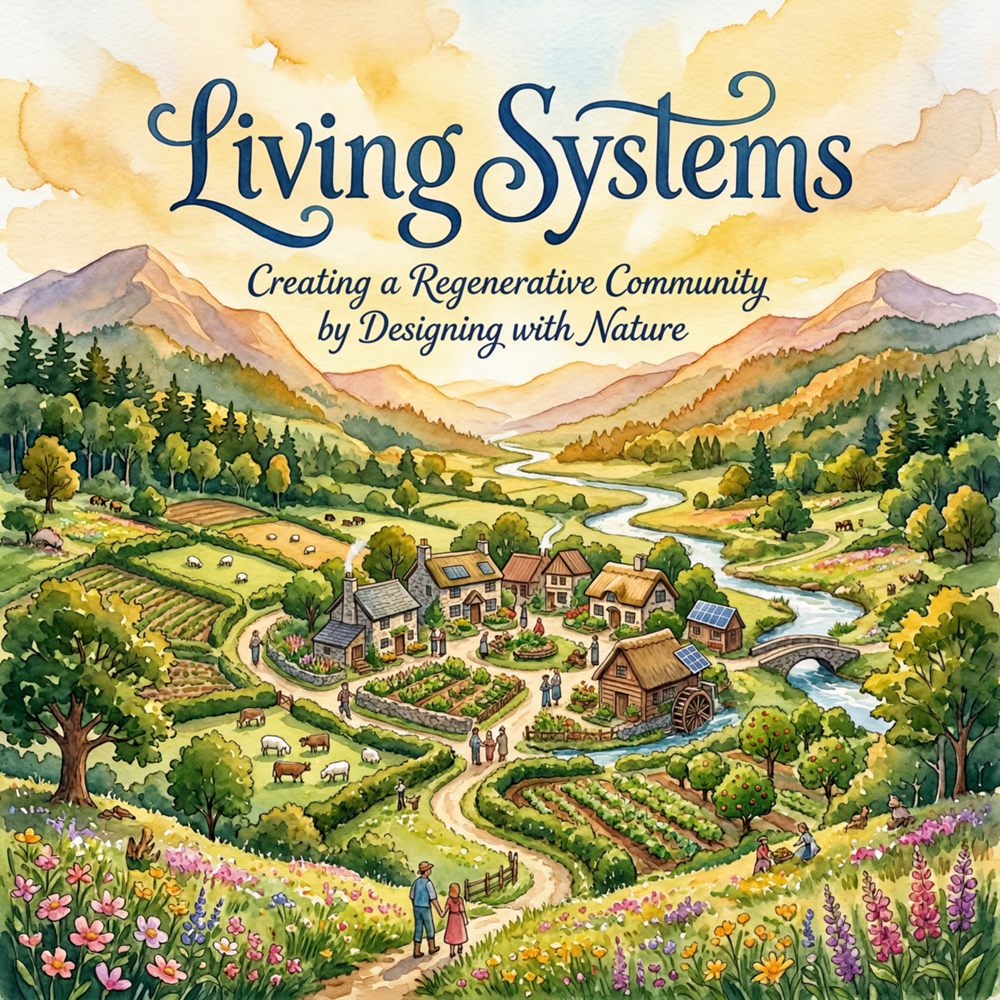
Living Systems™: A Regenerative Systems Design Scenario
Living Systems™ is an experiential learning scenario that immerses participants in the principles of regenerative systems thinking — a framework that goes far beyond conventional sustainability to actively restore, renew, and revitalize the ecological and social systems we depend upon. Designed for 3–6 players and playable in 60–90 minutes, the Starter Edition offers an accessible entry point into one of the most urgent intellectual challenges of our time: how to design human systems that work with living systems rather than against them.
At its heart, Living Systems™ is built on a simple but profound premise. Conventional design — whether of buildings, cities, farms, or communities — was developed using tools and frameworks meant for dead things. Engineers and architects are trained to extract resources from living systems, nail them down, and make them predictable and controllable. Regenerative design asks practitioners to let go of that impulse and instead embrace a new guiding question: How do we create technologies and systems that produce conditions conducive to more life?
The scenario places players around a landscape of six hexagonal tiles — Mountain, Forest, River, Farmland, Village, and Wetland — each representing a distinct ecological zone with its own resources and relationships. Players take on the roles of Mayor, Farmer, and Land Steward, each with unique powers and responsibilities. Working together, they must make collaborative decisions about how to manage water, soil, energy, and food across a connected terrain that behaves less like a machine and more like a living ecosystem. The arrangement of tiles itself is a design act: Should the River connect to the Wetland? Should the Village border the Farmland? From the very first move, players discover that context and connection define outcomes.
Gameplay unfolds across four rounds of three phases — Mission Selection, Design & Build, and Event & Resolution — challenging teams to pursue goals like restoring soil health, securing clean water, and housing all villagers, all while navigating unpredictable events like floods, droughts, and unexpected opportunities. A Health Tracker monitors the overall vitality of the system, and scoring rewards not just mission completion but systemic balance: teams are incentivized to keep all elements of the landscape thriving, not just the parts most immediately useful to human interests.
Underlying the game mechanics is a deeper pedagogical purpose. Living Systems™ is designed to shift how participants think, not just what they know. As the scenario's lead designer explains, you cannot simply add regenerative principles as "frosting on top" of conventional approaches — the entire cognitive framework must shift. Cities, like forests, are not designed once and finished. They co-evolve with the communities and ecosystems that inhabit them. Nature is not a backdrop to human activity; it is a co-developer, a model, and ultimately the standard against which all design must be measured.
Living Systems™ makes that shift tangible, collaborative, and — crucially — fun. By putting these ideas into play, participants leave not just with new information, but with a new way of seeing the world they are being asked to help regenerate.
Components
| Component | Quantity | Photo |
|---|---|---|
| {{item.name}} | {{item.quantity}} |
|
Vitals
| Average Rating | 0 reviews |
|---|---|
| Publish Date | May 24, 2026 |
| Edition | First |
| Department | Games |
| Tags | {{tag.properties.name}} |
Why buy this?
- Stunning watercolor art and 3D-rendered components.
- Dynamic 'Events' add deep tactical player interaction
- Modular terrain tiles ensure ecosystems are unique to play.
Related Games
Downloads
GamaVida

Notes
- This game contains a premium upgrade called UV Coating that makes the printed components more durable.
See It In Action
Ratings and Reviews
{{review.properties.review|truncate(review.stash('truncate')||200)}}