Petri Dash
Requirements
Description
Petri Dash, Divide and Conquer!
1-4 players, play time 30 minutes
Divide and Conquer! You are bacteria on a Petri dish trying to out-compete your rivals. Navigate the environment with straight runs and random tumbles. Knock your opponents out of the way. Collect food to divide or release toxins. Dodge deadly antibiotics or grab the antibiotic resistance trait. Eat the most food, remove the most antibiotics, and divide into the most bacteria to win!
Game Design: Dr. Brian Kvitko & Mary Kvitko
Art and Graphic Design: Dr. Jovana Mijatović Scouten
Petri Dash was designed to be both balanced and fun for players of mixed ages and skill levels. It's a game both kids and adults can enjoy playing together.
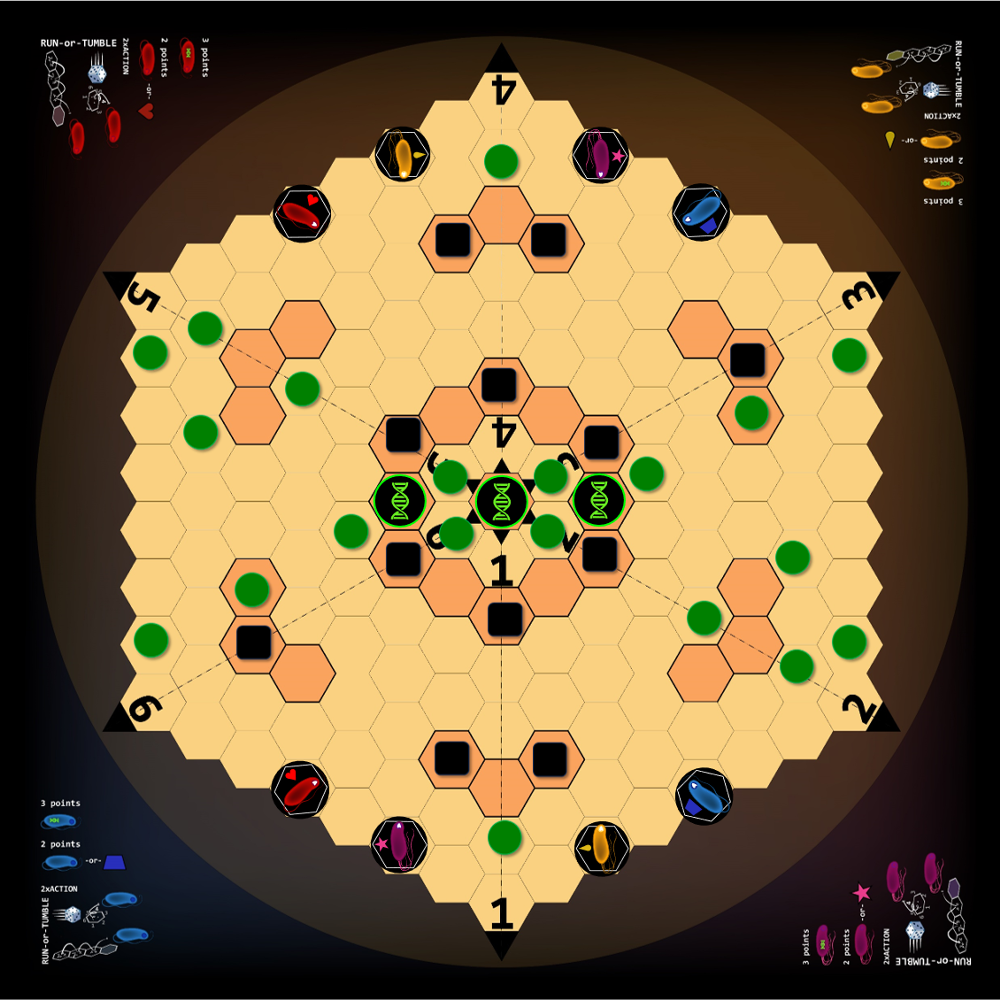
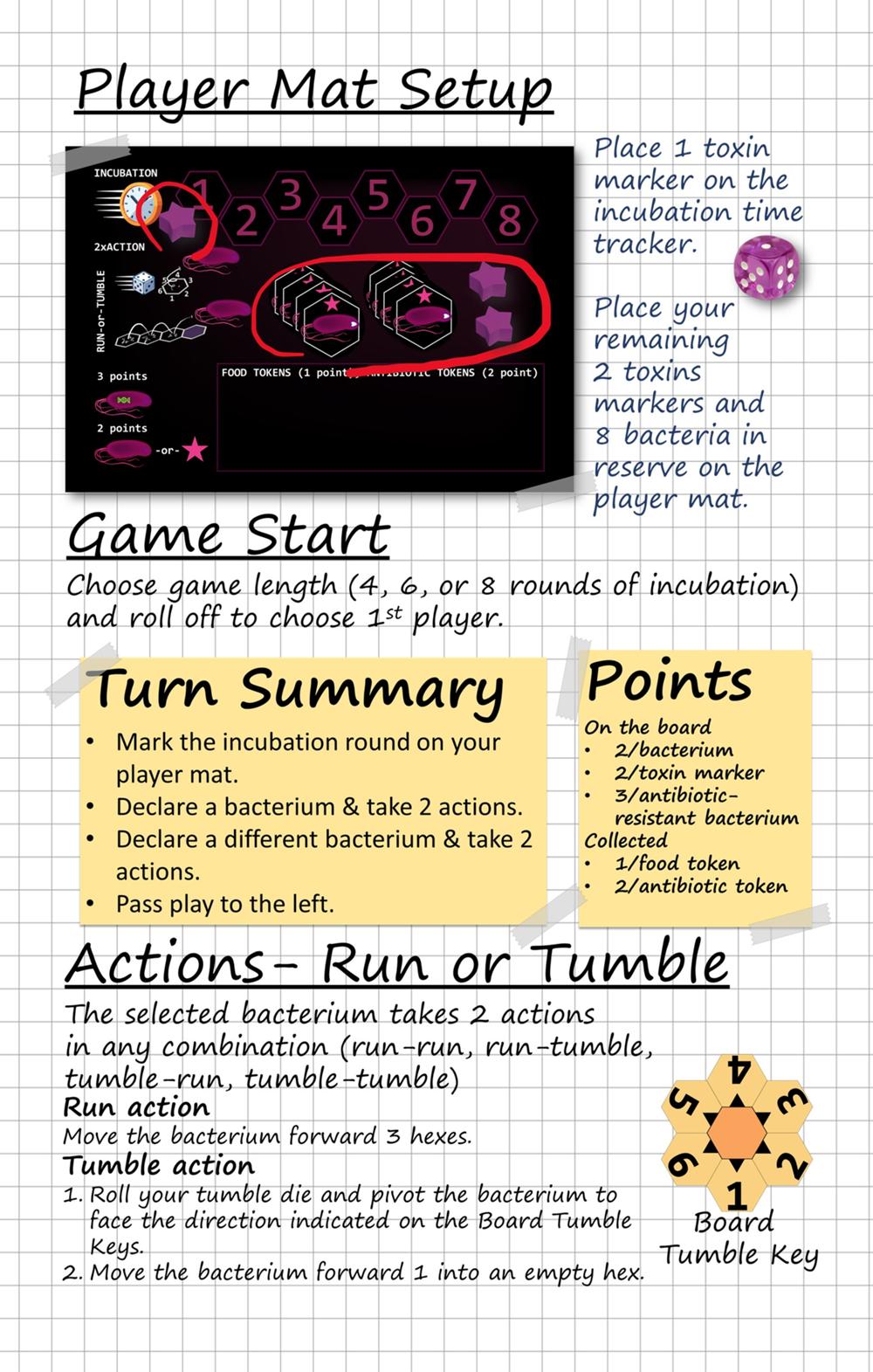
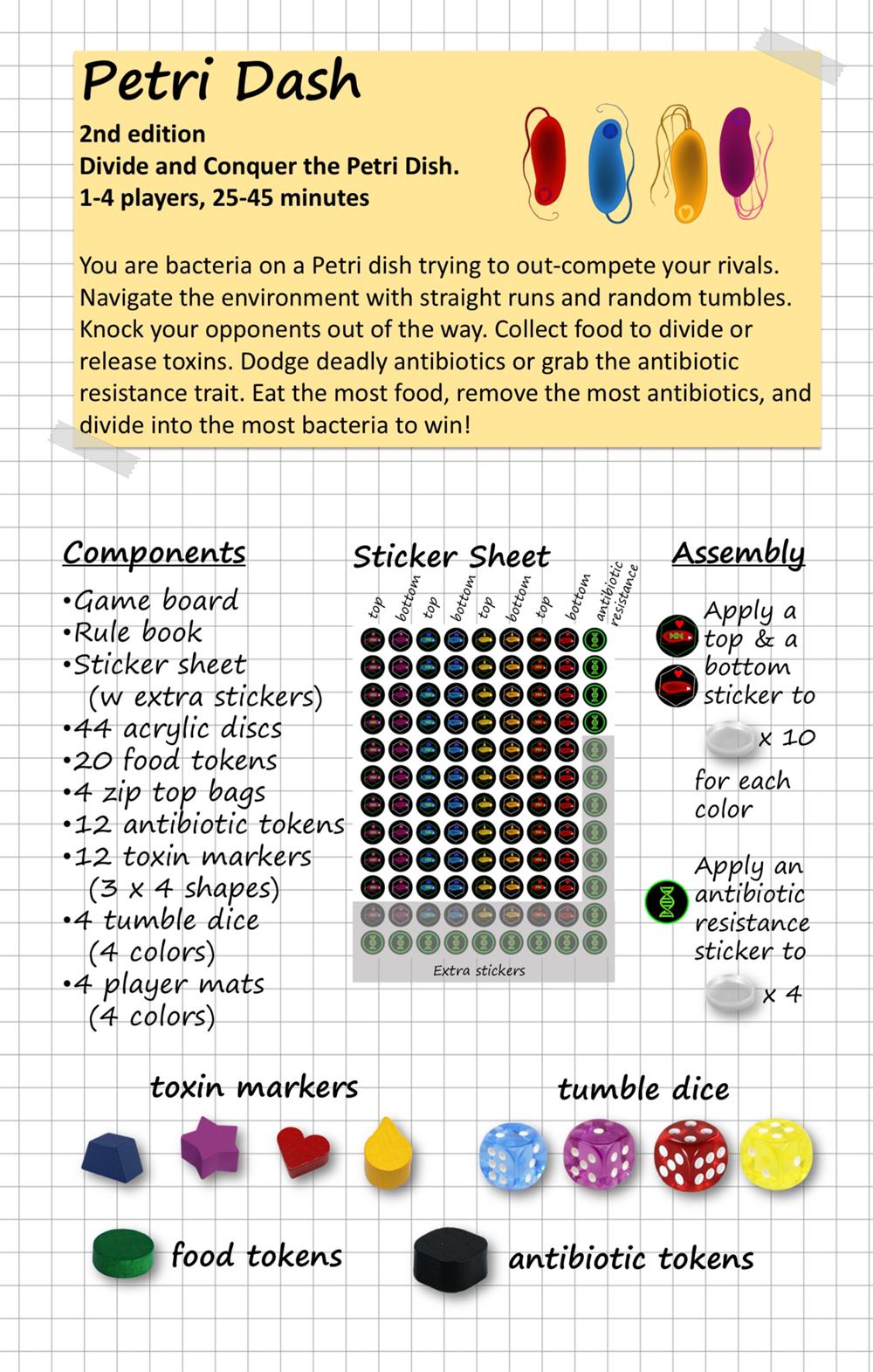
Petri Dash - 4 Copy Classroom Bundle
The Science of Petri Dash
The behavior of the bacteria in Petri Dash has been simplified, but is inspired by real microbiology.
Bacteria (singular: bacterium) are microscopic, single-celled organisms. They are the most abundant and genetically diverse type of life on Earth. Bacteria inhabit every environment, including air, water, soil, and the bodies of other organisms. Many bacteria use flagella (singular: flagellum), long, flexible tails powered by rotating molecular motors, to swim through their surroundings. When flagella spin counterclockwise, the bacterium moves forward in a straight run. When they spin clockwise, the bacterium tumbles randomly in place.
Bacteria have sensor proteins that allow them to detect compounds in their environment, essentially “tasting” or “smelling” them. These sensors are often clustered at one end of the cell. By adjusting how frequently they switch the spin direction of their flagella, bacteria can change the ratio of runs to tumbles. This enables them to navigate toward attractants, such as sugars or amino acids, or away from repellents, such as toxins.
Bacteria compete intensely for resources using various strategies, including chemical warfare. Some produce bacteriocin toxins that kill or inhibit competitors. Many antibiotics used in medicine are derived from bacteria or other microbes like fungi.
Bacteria reproduce asexually through binary fission, in which a mother cell divides into two identical daughter cells. Under favorable conditions, some species can divide every 20 minutes. Although binary fission produces genetic clones, bacteria can also acquire new DNA from their environment through genetic transformation, incorporating beneficial genes such as antibiotic resistance. Additionally, bacteria can exchange genes via conjugation, a process that typically requires close physical contact between cells. Conjugation is a major driver of antibiotic resistance, making bacterial infections harder to treat.
Components
| Component | Quantity | Photo |
|---|---|---|
| {{item.name}} | {{item.quantity}} |
|
Vitals
| Average Rating | 0 reviews |
|---|---|
| Publish Date | September 19, 2023 |
| Edition | Second |
| Department | Games |
| Tags | {{tag.properties.name}} |
Why buy this?
- Inspired by real science and microbiology.
- Tactical movement.
- Well balanced for players of mixed ages and skill levels.
Related Games
Downloads
Punch Noise Games

Notes
- This game contains a premium upgrade called UV Coating that makes the printed components more durable.
See It In Action
Ratings and Reviews
{{review.properties.review|truncate(review.stash('truncate')||200)}}